Tag Archives: food safety

The SE Menace

20 Mar

SE.jpg

So I went to this little UMN Extension workshop today, Producing and Selling Eggs and Poultry.”
There were a number of small scale poultry producers in attendance, and I do mean small.  I was the 2nd largest producer there, with a whole 62 bird flock.  The biggest producer was a lady from down near the Iowa border who had a flock of about 400.  There was even a couple who drove 80 miles down from St. Paul to find out how to sell the excess eggs from their 3 hens that they kept in their backyard.

Anyway, the workshop was pretty straightforward.  Here’s the Minnesota laws that you’ll need to follow, and here’s how to do it.  Easy peasy.

That is, until the presenters, all inspectors with the MDA’s Dairy & Food Inspection Division, start telling us about the silent epidimic.  It already sounds scary right?

Well, it gets pretty for-real scary if you’re an egg producer.

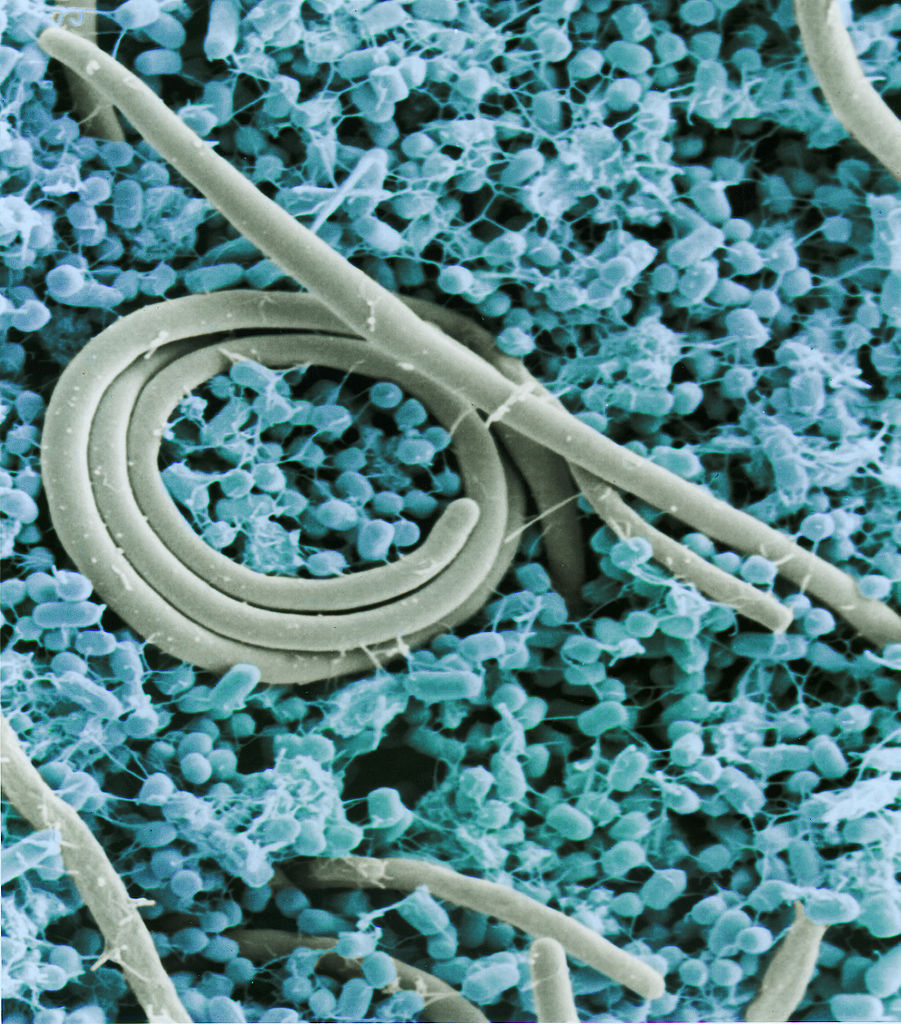
Salmonella Enteritidis (SE) is one of the ~2300 varieties of Salmonella.  This particular form of Slamonella just happens to be the reason that you’ve been warned against eating raw cookie dough, egg nog, merangue, hollandaise sauce, or anything else that’s awesome.

SE.jpg

Salmonella Enteritidis is perfectly adapted to living in the intestine of a chicken, causing the chicken no harm, but potentially passing the infection to a human through the consumption of the chicken’s egg.   If a person eats an undercooked or raw egg that’s infected with SE then they stand a fair chance of developing Salmonellosis.  Salmonellosis is usually an unpleasant infection, though in susceptible populations (the very old and very young) it can be deadly.

So you’re a farmer, and you’re producing eggs that might possibly kill someone?  That’s bad.

How about we just run some tests and make sure we don’t have any SE in our flock?  Sounds good right?

Yeah, sounds good until you ask how much testing costs.  The MDA inspectors just grit their teeth and shake their heads, “It’s really expensive. There’s only like 4 labs in the whole country that can test for it.”

Ouch.

So nobody can really afford to test for it, how about monitoring our birds for signs of infection?

Turns out, as SE is perfectly adapted to live in chickens, the chickens show absolutely no signs of infection.  Even a heavily-infected bird will look perfectly healthy, as the bacteria don’t harm the chicken at all.

Drat.

So it’s invisible, effectively undetectable, and it can hurt people.  How about some liability to top off that pile of awesome?

IMG_3255

Yep, the MDA inspectiors pulled no punches when they informed us that, even though SE is essentially undetectable, we would be held liable if we sold any egg that was infected with SE.  The MDA considers an egg infected with SE to be an “adulterated product” and therefore illegal to sell, even if you have no way of knowing that it’s infected, and even if it wasn’t prepared according to the safe handling practices printed on every egg carton.

To top it all off, if you’re ever found to have sold an SE-infected egg, the MDA will, in all likelihood, order your entire flock destroyed.

It’s at this point that there is a room full of farmers freaking out and trying to plan their hasty exit from the poultry business.


Of course, being the level-headed one, I ran the numbers.

Last year was a “bad year” for SE outbreaks in Minnesota.  There were 4.   That’s it.  4.  In a bad year.

Every single one of those 4 originated in a restaurant with some serious food handling problems.  We’re talking raw-egg hollandaise sauce sitting out unrefrigerated for 6 hours bad.  Or didn’t wash the ladle for the pancake/waffle/french-toast batter all week bad.

Of those 4 outbreaks there were: 46 sickened, 9 hospitalized and nobody died (30 sick and 9 hospitalized were from a single outbreak).

In fact, when pressed, none of the MDA inspectors could recall a single death caused by SE.  Neither could they recall a single instance of a farmer being held sued as a result of a SE outbreak.


So while the SE menace might not be as horrific as they initially made it out to be, it’s still something that we’d like to prevent if at all possible.  Here’s what we’re doing to help keep our eggs (and chickens) SE free.

Our chickens come from a hatchery that participates in the NPIP, meaning that they come from a SE monitored and SE vaccinated flock.

We work to safely eliminate mice that are the single biggest natural reservoir [PDF] of SE.

We’re looking into SE vaccinations for our flock.  It’s not supposed to be as effective in older birds, but it might be cheap insurance.

And at the MDA inspector’s recommendation, we’re doing what only us small farmers can do.  Socializing our chickens to reduce their stress.  Turns out that even if a chicken is infected with SE, they only shed the bacteria when they’re stressed.  By hanging out with them and practicing good animal husbandry, we can reduce or eliminate the times that they shed SE.  Try doing that in an industrial chicken barn!

Farm Paperwork

15 Jan

8385620890_db7dd54774

It’s been a joyous day here at the farm. It’s the new year, we’re starting a new farm, farmers markets are taking vendor applications, and we’ve got piles of paperwork that need to be done.

First up: Mark all the Farmers Market dates on the big calendar, along with first and last average frost dates, and dates for a few webinars I’d like to attend.

126

Then we get into the fun stuff.

Start things off with a bit of light reading, say the Minnesota Department of Employment and Economic Developments delightful little tome “A Guide To Starting a Business in Minnesota.”  It’s 358 pages of fun, let me tell ya.

We will be doing business as an LLC, which means that we have to fill out and file our Articles of Organization with the Minnesota Secretary of State’s Office with our $135 filing fee.  After, of course, doing a quick search online to make sure that nobody else in the state has taken “Green Machine Farm, LLC” which would be a real shame at this point…

Then we have to file with the Minnesota Department of Agriculture (MDA) to get a certificate exempting us from the Corporate Farm Law because we are a family-owned LLC.

Next on the list is registering with the MDA as an on-farm exempt producer for poultry and eggs.  This will allow us to sell our eggs to retail customers, restaurants and grocery stores.  As far as poultry, we will be able to process and sell up to 1000 birds per year from our on-farm store without any further paperwork or inspections.  If we want to sell a farm-processed bird at the farmers market or sell more than 1000 birds per year anywhere, then we will need to have our facility inspected by the MDA.  Our plan is to sell a few birds at farmers markets, so for now those birds will have to go to a USDA or State-inspected facility for processing.

We are exempt from having a Minnesota Retail Food Handlers License because we will only be selling products that came from our farm, of which the meats will be processed in a USDA-inspected facility.  Our breads and any canned goods aren’t potentially-hazardous foods and are specifically exempted, so we’re good there.

Minnesota puts out a handy PDF called the “Operational Guidelines for Farmers’ Market Vendors” which seems to cover all the legalities of this stuff.  Due to the somewhat byzantine nature of Minnesota’s laws, I’m still feel like there’s some license or inspection we will end up needing that will materialize out of nowhere. Time will tell, I suppose.

We are also exempt from collecting sales taxes (and getting a tax ID number) because Minnesota does not levy sales tax on Food except candy and soda.  As we do not yet have any soda trees or candy bushes, we ought to be OK for a while.

With all that out of the way (at least for now), we move on to Vendor Applications for the various farmers markets we might want to attend next year.  Red Wing has a nifty single-page application, while Northfield seems to want our entire life history on their 5 page application (not counting the 8 copies of licenses they want you to attach). But at least those two have applications available online.  I’m still waiting to get my hands on applications from Rochester and Eagan.  I gotta call those guys back tomorrow and harangue them about it a little.

The only application deadline that’s coming up fast is for the Red Wing farmers market.  I have to make it to Red Wing tomorrow before their annual winter meeting to get in our application.

So that’s been my day.  Try not to get too jealous of all the fun I’m having.

Consumer Reports – Meat on Drugs

25 Jun

logo-4258

Looks like Consumer Reports is the latest organization to throw its weight behind the antibiotic-free meat. Full story here.  In their report “Meat on Drugs” they have gone so far as to label the widespread use of agricultural antibiotics a “major national health crisis.”

It’s nice to see a big well-respected consumer advocacy group like this come to bat against routine sub-therapeutic antibiotic use.
I don’t have any problem using antibiotics to treat an animal if it has an actual infection.

The problem is that most antibiotics used on farms is mixed in the animal’s feed. When antibiotics are mixed in with animal feed it’s no longer being targeted to sick animals.  Instead, it’s going to the entire population, where it will treat the sick animals, but it will also “treat” otherwise healthy animals who’s immune systems are capable of defeating an infection on their own.

Antibiotic-resistant bacteria don’t come from sick (clinically infected) animals; those animals get treated with more than enough antibiotics to kill the threatening bacteria.  Antibiotic-resistance is bred in those animals who get a constant low-dose of antibiotics.  The low (sub-therapeutic) dose is enough to kill most (but not all) bacteria.  Those bacteria that aren’t killed are the basis for a new antibiotic-resistant generation.

The most infuriating thing about this whole deal is that the FDA has known about it for decades without doing anything.

FDA issued (a notice of hearing) in 1977 on proposals to withdraw approval of all subtherapeutic uses of penicillin in animal feed   and nearly all subtherapeutic uses of tetracyclines (oxytetracycline and chlortetracycline) in animal feed because of a threat to human health.

Several non-profit groups sued the FDA in 2011 to get them to finally do something about the problem they noticed way back in 1977.  A few weeks after the ruling they announced a voluntary phase-out of antibiotics in animal feed.  Don’t worry, they’ve got this totally under control.

So what can we do about all of this?

Choose meat raised without antibiotics.  Buy from a local farmer who you trust.  If you buy meat from the store, look for “no antibiotics” or “organic” labels.  Ask your favorite restaurant where they get their meat, and if it was raised without antibiotics.

We’ll all be better off for it.


Raw Milk Witch-hunt

20 Apr

What do you get when 14 people come down with E. coli and less than half of them have consumed raw milk?

That’s right, you get a raw milk witch-hunt!

Nevermind that the “the source of the infection has not been confirmed”

Come on everyone! Grab your pitchfork, your torch and let’s get ‘em!

I was just informed that the source of this “outbreak” is the farm were we got raw milk for most of my childhood. The farmer is going out of business. His milk has been tested for E.coli bacteria from 4 weeks prior to the illnesses, with zero samples testing positive.
It’s only a matter of time before the local media gets his name and really makes it a circus.

The local farming community, which has really taken off in the past year or two, is reeling.
We all know that it could easily have been an one of us.  E.coli in beef, lettuce, milk, eggs, it’s all happened before, and could happen again despite our best efforts.


Goodbye Pink Slime, Hello Arsenic.

7 Apr

Goodbye Pink Slime, Hello Arsenic.

Wow did the pink slime story ever blow up or what?  The story circulated for several weeks on farm and food blogs, and then went mainstream.  Now BPI (the makers of pink slime) are closing 3 of their 4 pink slime factories.

Predictably, the big-ag proponents were behind the curve, finally pulling out all the stops with the “Dude it’s Beef.” campaign.  They are proving what we’ve suspected all along, that they’re reactive, and alarmingly tone-deaf to the public’s growing concerns about where their food comes from.

So with the demise of pink slime one more fake-food foe is vanquished.  What now?

Nicholas Kristof has the answer, reporting Monday on what I suspect will be the next big food controversy.

Yes, as it turns out, most of the chicken you see in the store contains small amounts of Arsenic, caffeine, anti-histamines, acitomenophen and banned antibiotics.  This is by far a worse state of affairs than pink slime ever was.  Pink slime, for all of it’s stomach-turning qualities was never a genuine threat to the health of consumers.  Pink slime was offensive because consumers did not want to buy a product (ground beef) that contained 15% of a re-processed waste product without being labeled as such.

The drugs that are currently being fed to chickens are an entirely different matter.  This is not a matter of processing.  We know these drugs are being used to feed the animals we eat.  We know that small amounts of these drugs wind up in the animals body, in the food that we eat.   The FDA insists that chicken is safe to eat, and that consumers will not be subject to harmful levels of arsenic or any other drug through the consumption of chicken.

The public has a right to be a wee bit skeptical of the FDA’s claims.  After all, there have been an alarming number of recalls for FDA approved drugs in the past decade, epitomized by the Vioxx scandal.  And the Union of Concerned Scientists has consistently found that FDA scientists are subject to political and industry pressure in their studies.

So there is admittedly uncertainty in the results of current arsenic and drug studies.  The FDA’s studies suggest that the levels of drugs found in chicken (and pork) are safe, but there are few other independent studies out there to verify those claims.

If only there were a tool that could help us make a decision even in the face of uncertainty.  Luckily for us, this tool exists and it’s called the Precautionary Principle.  The precautionary principle is essentially a decision-making tool that allows us to make the best decision even when we do not know what the outcomes will be with any certianty.
Precautionary Principle

For example, lets say that you went to work and you think you might not have any more milk at home.  Either you are out of milk, or you are not.   You can choose to buy milk on your way home, or you can choose to not buy milk.

  • If you buy milk, and you have some left at home, then just bought an unnecessary carton of milk.
  • If you buy milk and you are indeed out of milk at home, then you have just averted a breakfast disaster.
  • If you don’t buy milk and you have some left at home, then there really isn’t any problem either.
  • But, if you don’t buy milk, and you really don’t have any left at home, well, that’s just a disaster.  Now you’ve stuck eating a bowl full of dry cereal.

With all of the options laid out before us, it’s probably better for us to go ahead and pick up a carton of milk on our way home.  The worst that could happen is that we’re out a few bucks.


The stakes are raised a bit higher when we replace milk with arsenic and other pharmaceuticals.  Now instead of not getting a good breakfast, we’re possibly ingesting carcinogens and drugs which could have major effects on our health.  It makes sense to pay a few cents more for chicken that is not fed any arsenic or drugs even if it turns out to be perfectly safe.  The truth is that for now, we just don’t know, and it’s too big a gamble to take with our lives.